Why Optimized Maintenance Pays for Itself in Cement Operations.
By Dennis Blauser
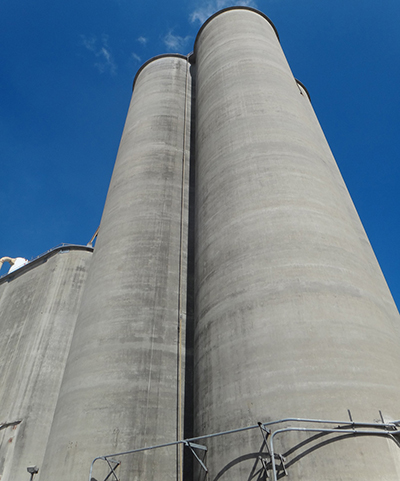
It’s easy for cement producers to treat major production equipment as the priority for capital planning and view the storage silo as an afterthought. Often, bulk storage silos are seen as concrete or steel shells that simply hold material until it is needed. However, that can prove to be a very expensive assumption.
A silo with material buildup, worn air pads or a compromised roof coating carries risks that might not be immediately apparent. These issues lead to production delays or water intrusion that can hydrate stored materials and quietly reduce capacity, slowly eroding the bottom line every day it goes unaddressed.
Understanding where those costs originate and how an optimized silo cleaning program can help eliminate them is the difference between a facility that budgets reactively and one that maintains controllable line items.
Buildup Is a Capacity Problem Before It’s a Structural One
Because of its inherent tendency to compact under pressure and hydrate when exposed to moisture, stored cement is uniquely prone to material buildup. A pinhole leak in a silo roof or a bolted wall joint introduces enough moisture to trigger localized hydration and once cement begins to harden against a silo wall, the problem does not go away on its own.
In addition to growing over time, large amounts of built-up material can break off, causing damage to discharge cones or even silo walls. Additionally, material buildup lowers the overall storage capacity of your silos.
In short, that dead volume has a direct dollar cost. Hardened material clinging to a silo wall lowers the rated storage capacity of your silo. Furthermore, material buildup is also lost material that often cannot be salvaged for sale.
Operations teams compensate by ordering more frequent deliveries, running additional truck or rail cycles or scheduling around a silo that reads “full” while sitting well under its actual working capacity. While those workarounds do not show up on a maintenance budget line, they do show up in freight, labor, and scheduling costs.
Poor Flow Behavior Multiplies Energy Costs
Very few facility budgets treat a storage silo as an energy consumer, but a longstanding Department of Energy assessment of the cement sector suggests otherwise, putting the industry’s overall thermal efficiency at under 40%.1
Cement and concrete manufacturing remains listed among the agency’s energy-intensive priority sectors for ongoing efficiency research, signifying that energy efficiency is a gap the industry is still working to close.2
Storage and material handling factor into that picture because moving cement through a silo takes real energy whenever gravity alone cannot get the job done. A facility’s equipment costs are one of the few pieces of that gap a plant can control directly.
But what can realistically be done to lower energy costs of silos? Flow pattern is where that control starts, and it begins with hopper geometry. Funnel flow, produced by a shallower hopper angle, typically costs 20% to 30% less to construct than a mass-flow design, which is a large part of why it remains common industry-wide.
The tradeoff, however, is that a funnel-flow silo drains from a narrow central channel first, leaving material along the walls stationary. If that silo is not emptied on a regular basis, stagnant material hardens in place, producing ratholing and irregular discharge.
Once that happens, gravity alone can no longer move the product, and the facility must bring in pneumatic air blasters, mechanical vibrators, and other fluidizing equipment in an attempt to get material moving. The solution is a proactive professional silo cleaning schedule that helps reduce or eliminate the additional utility costs these systems bring.
Downtime Is the Cost Facility Managers Feel First
When a cement silo’s flow becomes irregular enough to require intervention, the most immediate cost is production downtime. A blocked discharge or an asymmetric flow condition can idle a batch plant, a kiln feed system, or a packaging line until the silo is cleared.
The dollar figure attached to downtime varies by facility, but it compounds quickly: idle labor, delayed shipments, contractual penalties on missed orders, and in some cases the cost of sourcing material from an alternate supplier while the silo is out of service.
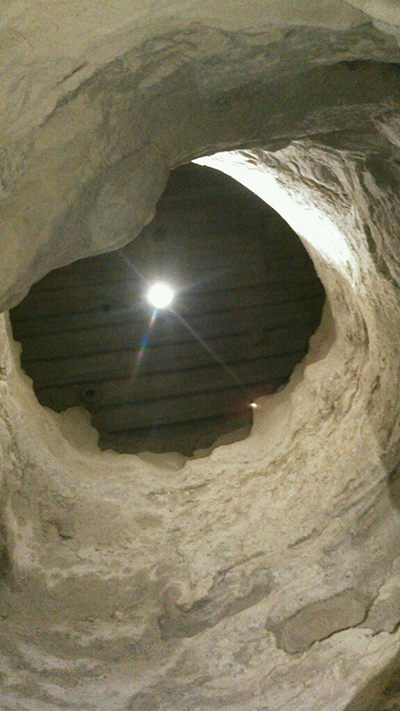
This is where the cleaning method used matters as much as the decision to clean at all. Remote, pneumatic silo cleaning systems clear buildup and blockages without requiring personnel to enter the silo, ensuring greater worker safety. Higher-output remote cleaning systems remove significantly more material per hour than older, slower alternatives, while maintaining this level of safety.
USA Silo Service’s proprietary system, The Boss, was engineered specifically to reduce the number of days a crew needs on site, which translates directly into less downtime, fewer billable labor days, and a faster return to full production capacity. It relies on an enhanced, pneumatic cleaning system with specialized cleaning head attachments depending on material blockage type.
This combination moves more material per hour and is 55% more powerful than conventional pneumatic cleaning systems. Whip-style systems, by contrast, tend to take longer to clear the same volume of material, extending both the cleaning window and the associated production loss.
Preventive Cleaning Costs Less Than Corrective Repair
The clearest cost argument for a scheduled cleaning program is the one that avoids the largest expense entirely: structural repair or replacement. Left unaddressed, wall buildup and asymmetric flow can progress to wall bowing, concrete cracking and/or delamination, and in severe cases, structural failure. Emergency silo repair and restoration costs almost always drastically exceed preventive cleaning and maintenance costs. It also jeopardizes safety and results in additional downtime.
While preventive cleaning is the solution, it must be done by trained silo cleaning professionals. Untrained internal labor sent in to clear a blockage manually introduces its own severe cost exposure, including the potential for injury, fatality and the liability, regulatory and reputational costs that follow.
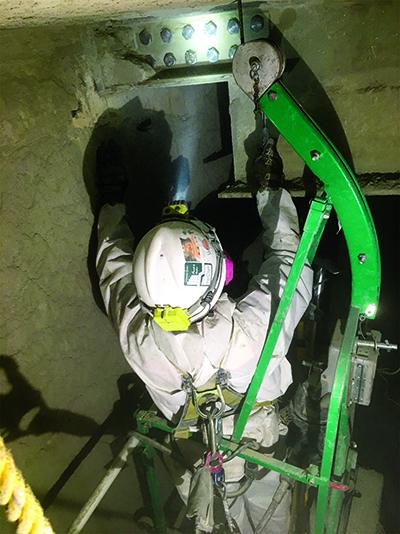
Professional cleaning crews trained to Occupational Safety and Health Administration (OSHA) and Mine Safety and Health Administration (MSHA) standards clear material without requiring personnel to enter a hazardous or permit-required confined space, converting what could be a catastrophic loss event into a routine, budgeted maintenance visit.
Building a Cost-Predictable Maintenance Cycle
For cement producers, the most cost-effective silo strategy combines three elements: routine emptying to prevent compaction, proactive professional cleaning and periodic silo inspections. Professional silo inspections, ideally conducted every two to five years, give facilities the data needed to time cleaning and coating work before a minor issue becomes an emergency call.
Additional proactive maintenance includes ensuring the roof-top and exterior wall coating bonds directly to the structure, rather than acting as a floating membrane. Even minor deficiencies that can be easily missed by the naked eye allow moisture intrusion that can spread underneath the membrane and cause extensive structural damage.
Elastomeric roof and wall coatings, however, seal small penetrations in steel and concrete silos and are naturally resistant to vibration and movement common in silo loading and unloading. This helps improve durability and long-term performance of storage structures.
Overall, the facilities that manage silo cleaning costs most effectively do so before production issues are apparent. They treat cleaning as a scheduled, predictable line item, sized to the material stored and the flow pattern of the silo, and they select a provider whose pricing, equipment, and safety record make that cost knowable in advance. For a cement operation, where every ton of dead capacity and every hour of unplanned downtime carries a real financial cost, that shift in approach is where the savings are found.
Dennis Blauser is CEO, USA Silo Service.
References